
Private Personal Training in Sydney: What to Look For Before You Choose a Trainer
Updated: Aug 4
Frequently asked questions
What should I look for in a private personal trainer?
Look for relevant qualifications, a clear assessment process, sensible progression, transparent communication and experience with goals or limitations similar to yours.
Is one-to-one training worth it?
It can be valuable when you want individual programming, close coaching, accountability, privacy or careful coordination around pain and injury.
How often should I see a personal trainer?
Frequency depends on experience, budget, goals and how confidently you can complete sessions independently.
Related Body Clinic Sydney resources
Written and clinically reviewed by Nigel Morgan, Physiotherapist and Exercise Physiologist.
Searching for a private personal trainer in Sydney can be surprisingly difficult. Many services use similar language—personalised programs, premium coaching, accountability and results—but the actual experience can vary enormously.
For a busy professional, the right trainer should do more than supervise exercises. They should understand your health history, work demands, injuries, training experience and long-term goals, then turn that information into a program you can realistically follow.
This guide explains what distinguishes high-quality private personal training and what to ask before committing.
What is private personal training?
Private personal training is one-to-one exercise coaching delivered in a quieter, more controlled environment than a typical commercial gym. The session is reserved for you, and the program is adjusted to your goals, current
capacity and response to training.
Privacy is only one part of the service. The real value should be individual decision-making. Your trainer should know why each exercise is included, how hard you should work, when the program should progress and how training fits around your work, travel, sport and recovery.
A private studio can be particularly useful for executives and professionals who value discretion, efficient sessions and direct access to their coach. It can also suit people returning after injury, those who feel uncomfortable in a crowded gym, and clients who want closer technical supervision.
Start with qualifications and scope of practice
Ask about the trainer’s qualifications, experience and professional registrations. A capable trainer should be transparent about what they are qualified to provide and when another practitioner is needed.
General fitness coaching, injury rehabilitation and management of complex health conditions are not identical services. If you have persistent pain, a recent operation, significant medical history or uncertainty about what is safe, a physiotherapist or exercise physiologist may need to assess you or contribute to the plan.
An integrated service can reduce the gap between treatment and training. Instead of finishing rehabilitation and being left to work out what comes next, your plan can progress from symptom management to strength, fitness and performance.
Look for a genuine assessment, not a generic workout
A good first appointment should explore your goals in practical terms. “Get fitter” may mean improving aerobic capacity for long workdays, preparing for a cycling event, reducing cardiometabolic risk or simply climbing stairs without feeling breathless. “Get stronger” may mean building muscle, supporting bone health, returning to sport or feeling more capable in everyday life.
The assessment should consider:
Your training history and current activity.
Past injuries, pain and operations.
Medical conditions, medications and relevant health information.
Your work schedule, travel and sleep.
Exercises you enjoy or dislike.
Available training days and realistic session length.
Measures that matter to you, such as strength, body composition, waist circumference, metabolic markers or pain-free function.
Assessment of lab tests like DEXA scans, MRI scans or blood tests
Be cautious if every new client receives the same workout or if the consultation immediately becomes a high-pressure sales conversation.
The program should be measurable
Personal training works best when “progress” is defined. Your coach should record training load, repetitions, exercise variations and relevant outcomes. This allows the program to progress deliberately instead of changing randomly each session.
Depending on your goals, useful measures may include strength tests, submaximal fitness tests, training volume, body-composition data, resting heart rate, blood pressure, movement capacity or validated questionnaires. Not every metric needs to be tracked, and more data is not always better. The measures should influence decisions.
For example, if your goal is muscle gain, the program should include sufficient weekly resistance-training volume, appropriate effort and progression. If your goal is longevity, strength is important but so are aerobic capacity, daily movement, balance, recovery and consistency.
Ask how progression is managed
A strong program changes for a reason. Early sessions may emphasise technique and tolerance. Over time, the trainer should adjust load, volume, range of motion, exercise complexity or training density.
Progression should not mean making every workout harder. It may also mean performing the same work with better control, tolerating a previously painful movement, recovering more quickly, or completing an effective session in less time.
The trainer should also know when to reduce the dose. High work stress, poor sleep, illness, travel and a sudden increase in sport can change what you can recover from. Intelligent coaching responds to that context without abandoning the overall plan.
How should injuries be handled?
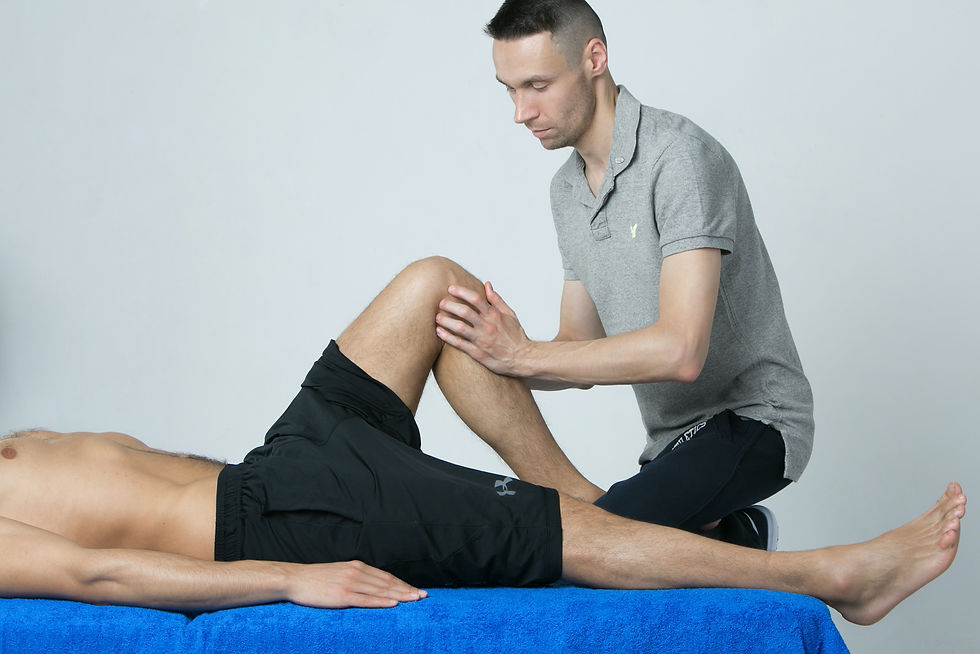
A trainer should not diagnose an injury outside their professional scope. They should recognise when pain needs assessment, modify exercises appropriately and communicate with your treating clinician where relevant. As trained Physiotherapists we manage all of this for you as part of the service.
Pain does not always require complete rest, but repeatedly pushing through worsening symptoms is not good coaching. A useful approach preserves tolerable activity, identifies aggravating loads and rebuilds capacity progressively.
If you are choosing a trainer after injury, ask how they have worked with similar cases and how they coordinate with physiotherapists or doctors. Specific guarantees are a warning sign; individual recovery varies.
What does results-driven training really mean?
“Results-driven” should describe a process, not a promise. The process includes a clear goal, an appropriate program, consistent attendance, progressive overload, recovery, nutrition habits and periodic review.
The trainer controls the quality of the plan and coaching. You and the trainer share responsibility for consistency. Neither can guarantee a precise result by a fixed date because progress is affected by training history, health, adherence and biology.
A credible coach will give you realistic expectations and explain the behaviours most likely to move the outcome.
Training for longevity requires breadth
Longevity training is not a single workout style. A well-rounded plan normally includes resistance training for muscle and strength, aerobic work for cardiorespiratory fitness, some higher-intensity exposure where appropriate, and enough mobility, balance and coordination to support daily function.
Australian movement guidance recommends that adults be active most days, perform muscle-strengthening activities on at least two days each week, include functional activities targeting mobility, balance and coordination, accumulate light activity and break up prolonged sitting.
A time-efficient executive program can work toward these goals without requiring daily gym sessions. Two or three well-designed coached sessions, supported by walking, cycling or short independent sessions, may be more sustainable than an ambitious schedule that repeatedly collapses.
The environment matters
The best training environment is the one that helps you attend consistently and train well. For some people that is a lively commercial gym. For others it is a private studio with less noise, fewer interruptions and no waiting for equipment.
Consider location, shower and change facilities, session punctuality, cleanliness, equipment and whether the space feels professional. In the Sydney CBD, convenience can determine whether training survives a demanding week.
Questions to ask a private personal trainer
Before committing, ask:
How will you assess my starting point?
How will you build the program around my goals and injuries?
What qualifications and registrations do you hold?
How do you track progress?
How often is the program reviewed?
What happens when I travel or have an unusually busy week?
How do you work with physiotherapists, doctors or other clinicians?
What is included outside the session?
What are the cancellation and communication policies?
Clear answers indicate a considered service. Vague promises and pressure to buy a large package before assessment deserve caution.
What should the first month look like?
The first few sessions should establish a baseline, teach the core movements and identify an appropriate training dose. You should understand the purpose of the program and what you are expected to do between sessions.
By the end of the first month, the coach should have useful information about your recovery, exercise tolerance and schedule. The plan can then become more specific. You may not have reached the final outcome, but the process should feel organised and progress should be visible in the training record.
The bottom line
The best private personal trainer is not necessarily the person with the loudest marketing or the most complicated workouts. Look for relevant qualifications, careful assessment, measurable programming, appropriate clinical boundaries and a service that fits your life.
For busy professionals, effective training should reduce friction. The plan should be clear, sessions should start on time, and every exercise should move you toward better health, performance or function.
Would you like to schedule an appointment?
Complete the enquiry form at the bottom of this page and a member of our team will contact you. You can also email nigel@bodyclinicsydney.com or call 0410 148 296.
Medical information disclaimer
This article provides general educational information and does not replace individual medical or exercise advice. If you have pain, a medical condition or concerns about starting exercise, seek advice from an appropriately qualified health professional.
Reference
Australian Government Department of Health, Disability and Ageing. 24-hour movement guidelines for Australian adults. 2026.

Comments